Vedic Philosophy8 min read•Published: 2026-04-01

Bhagavad Gita's Timeless Lessons for Overcoming Anxiety, Stress & Finding Daily Inner Peace

When modern life feels overwhelming, Lord Krishna's guidance on Kurukshetra provides a practical spiritual roadmap for clarity, emotional equilibrium, and duty.

BhaktiAI Vedic Research Board
Sanatana Dharma Scholars & Practitioners • Updated 2026-10-28
1580 words
Bhagavad Gita's Timeless Lessons for Overcoming Anxiety, Stress & Finding Daily Inner Peace
BhaktiAI Sacred Studies SeriesSanatana Dharma Canonical Research

1. Arjuna's Breakdown: The Ancient Mirror of Modern Stress

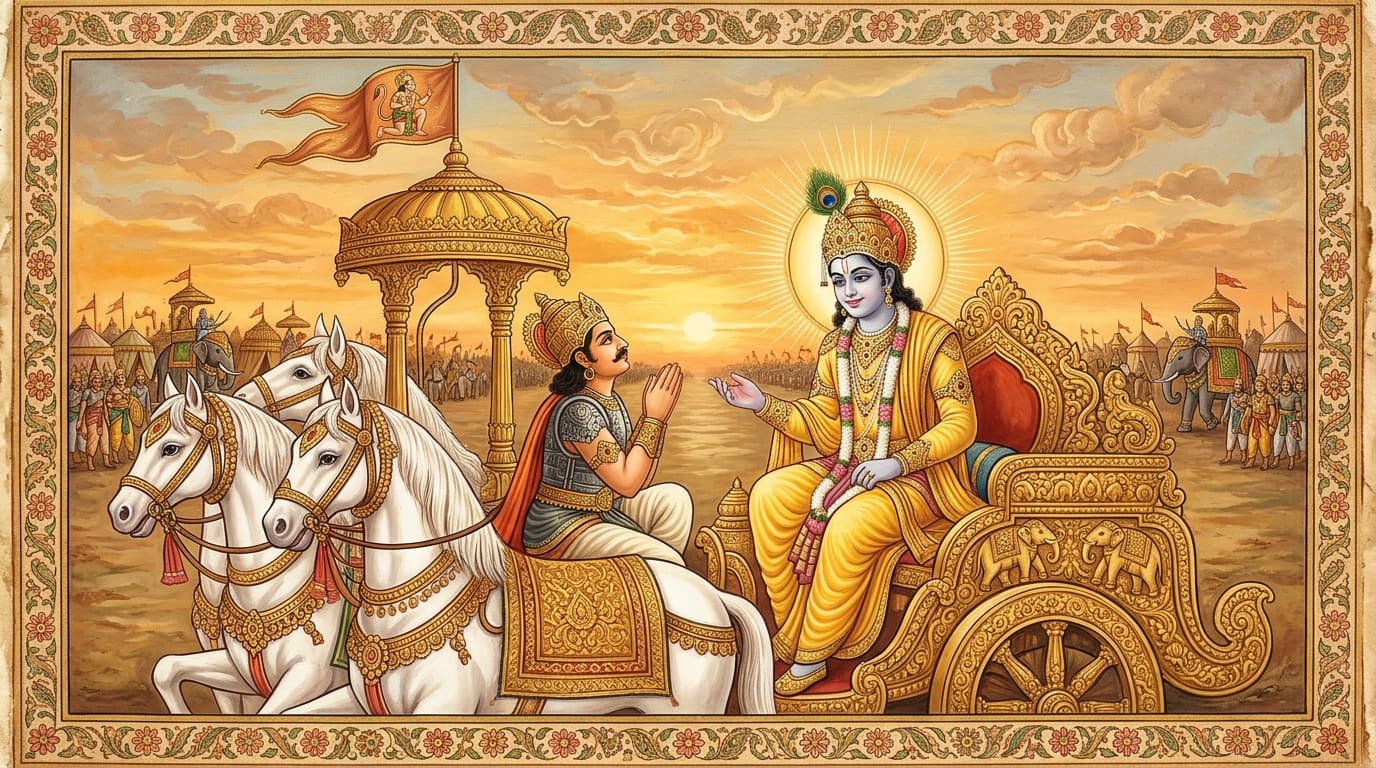
The Bhagavad Gita begins not in a tranquil Himalayan monastery, but squarely in the middle of a battlefield of immense crisis. In Chapter 1, Prince Arjuna drops his bow, trembling with palpitations, a parched throat, and dizzying grief (Vishada Yoga).

Arjuna's distress is strikingly modern. Like today's professionals, caregivers, and students, he was overwhelmed by conflicting duties, fear of failure, paralysis of choice, and existential guilt. Lord Krishna's response across 700 verses is the world's most sophisticated manual of cognitive reframing and spiritual liberation.

Sacred Verse & Shloka
Bhagavad Gita, Chapter 2, Verse 47

कर्मण्येवाधिकारस्ते मा फलेषु कदाचन । मा कर्मफलहेतुर्भूर्मा ते सङ्गोऽस्त्वकर्मणि ॥

"Karmany Evadhikaras Te Ma Phaleshu Kadachana | Ma Karma Phala Hetur Bhur Ma Te Sango 'Stv Akarmani ||"

Spiritual Meaning: You have a right only to perform your prescribed duty, but never to the fruits of action. Do not let the fruits of action be your motive, nor let your attachment be to inaction.

2. Nishkama Karma: The Ultimate Cure for Performance Anxiety

Most anxiety stems from mental projection into the future — fretting over whether one will be praised, promoted, rejected, or rewarded. In Chapter 2, Verse 47, Krishna reveals the cornerstone principle of Karma Yoga: Nishkama Karma (selfless action without attachment to outcomes).

Krishna does not teach apathy or substandard effort. On the contrary, when you stop diverting mental bandwidth toward worrying about results, 100% of your energy concentrates on flawless execution in the present moment. You control your effort, sincerity, and preparation; you never control external market conditions, other people's opinions, or unpredictable circumstances.

Key Spiritual Insights
  • Focus entirely on the action itself, not on future rewards
  • Emotional equanimity in both success and failure is true yoga
  • Inaction due to fear of failure is spiritual stagnation

3. Cultivating the Sthitaprajna Mindset (Unshakable Equanimity)

In Chapter 2, Verses 55-72, Arjuna asks Krishna to define a 'Sthitaprajna' — a person of steady, enlightened intellect. How does such a person speak, sit, and walk amidst life's storms?

Krishna explains that a steady mind is like an ocean. Thousands of rivers pour into the ocean day and night, yet the ocean remains deep, calm, and unmoved. Conversely, a shallow puddle overflows or dries up with the slightest weather change.

When praise and blame, gain and loss, joy and sorrow pass through your awareness without disturbing your inner anchor in the Divine, you have attained true freedom.
4. Taming the Restless Mind: Abhyasa & Vairagya

In Chapter 6, Arjuna confesses to Krishna that the mind is as restless, turbulent, obstinate, and difficult to control as the howling wind (चञ्चलं हि मनः कृष्ण).

Krishna acknowledges this reality with profound empathy (असंशयं महाबाहो मनो दुर्निग्रहं चलम्), but gives the two-fold antidote:

1. Abhyasa (Consistent Daily Practice): Daily meditation, chanting, japa, and mindful living.

2. Vairagya (Wise Dispassion): Stepping back from compulsive desires, toxic comparisons on social media, and transient cravings.

5. Sharanagati: The Peace of Total Surrender

The climax of the Gita culminates in Chapter 18, Verse 66 (Charama Shloka), where Krishna invites Arjuna to lay down all anxious burdens and take complete refuge in Him:

सर्वधर्मान्परित्यज्य मामेकं शरणं व्रज । अहं त्वां सर्वपापेभ्यो मोक्षयिष्यामि मा शुचः ॥

'Abandon all varieties of dharmas and simply surrender unto Me alone. I shall liberate you from all sinful reactions; grieve not.'

Surrender in the Gita is not defeat; it is the ultimate empowerment of trusting that the cosmos is held in divine hands.

Daily Sacred Darshan

Experience High-Resolution 4K Wallpapers

Immerse your daily life in sacred geometry and divine presence with verified 4K mobile wallpapers.

Explore Darshan Gallery
Devotional Questions & Answers

Frequently Asked Questions

Q:How can I apply Nishkama Karma in my modern corporate career?

Dedicate your work as an offering to God or universal welfare. Prepare meticulously, lead with integrity, treat colleagues with respect, and detach your self-worth from whether a promotion or project succeeds or gets delayed.

Q:What is the best time of day to read the Bhagavad Gita?

Reading even one shloka with its commentary in the early morning sets a peaceful, centered tone for the day. Evening reading before sleep helps dissolve daily stress.

Q:Does the Gita encourage giving up worldly life?

No. Lord Krishna specifically steered Arjuna away from renouncing his duties to wander the forest. The Gita teaches Karma Yoga — living actively in the world while remaining inwardly detached, like a lotus leaf in water.

BhaktiAI Vedic Research Board

Sanatana Dharma Scholars & Practitioners

Composed of Sanskrit linguists and devotional practitioners dedicated to preserving classical Vedic knowledge and sacred iconography.

Deepen Your Sadhana

Related Canonical Studies