Deity Iconography7 min read•Published: 2026-03-25

The Sacred Symbolism of Lord Shiva: Deciphering the Trishula, Damru, Crescent Moon, and Ganga

Every attribute of Mahadev conveys profound cosmological and yogic wisdom. Delve into the timeless visual iconography of Lord Shiva.

BhaktiAI Vedic Research Board
Sanatana Dharma Scholars & Practitioners • Updated 2026-10-28
1510 words
The Sacred Symbolism of Lord Shiva: Deciphering the Trishula, Damru, Crescent Moon, and Ganga
BhaktiAI Sacred Studies SeriesSanatana Dharma Canonical Research

1. The Supreme Yogi: Visualizing the Form of the Formless

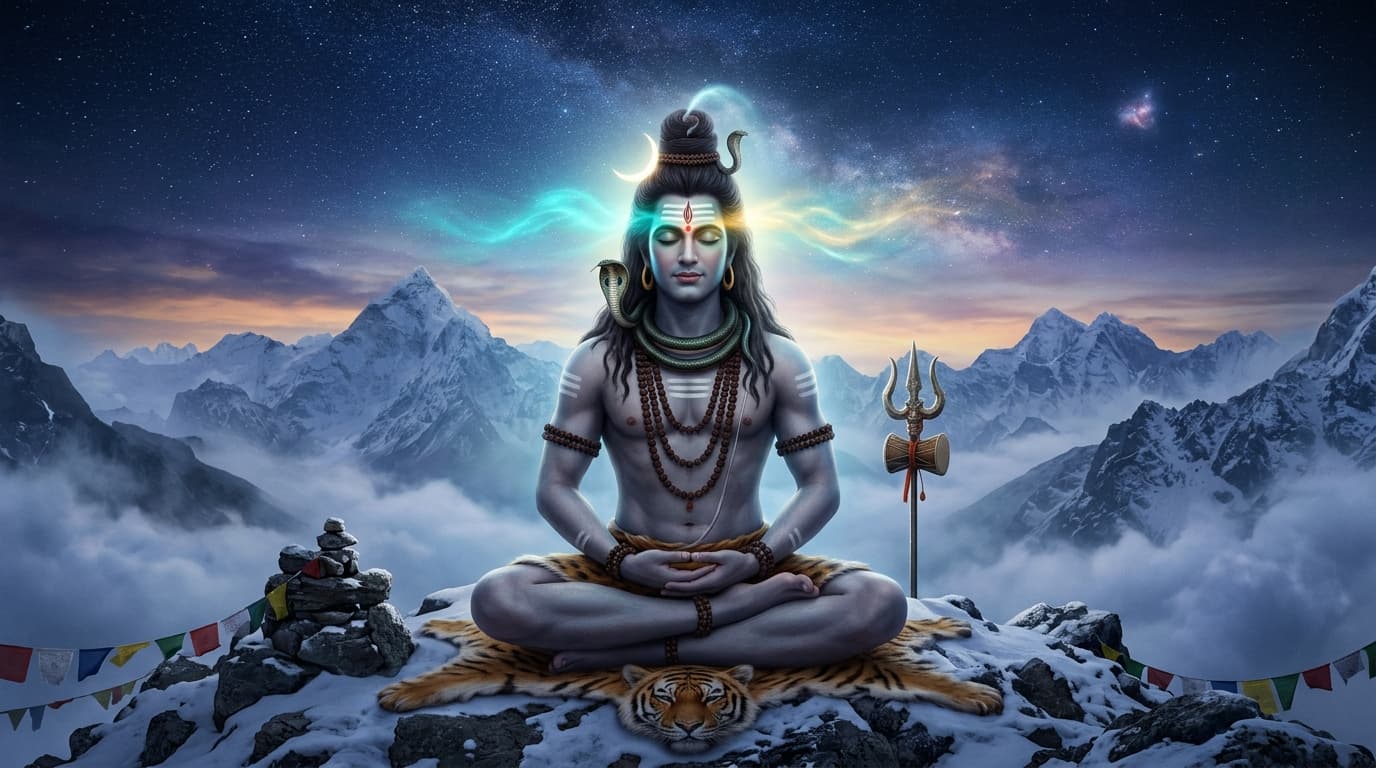
In Hindu philosophy, Lord Shiva represents Parabrahman — the ultimate, unmanifest Supreme Consciousness. To make this vast transcendental reality accessible to the human heart, sacred iconography portrays Mahadev as the supreme Ascetic meditating on Mount Kailash.

Every weapon, serpent, river, and ornament adorning Lord Shiva carries layered philosophical significance, teaching devotees how to master their senses, overcome delusion, and realize their immortal nature.

Sacred Verse & Shloka
Shiva Yajur Mantra

कर्पूरगौरं करुणावतारं संसारसारम् भुजगेन्द्रहारम् । सदावसन्तं हृदयारविन्दे भवं भवानीसहितं नमामि ॥

"Karpura Gauram Karunavataram Samsarasaram Bhujagendra Haram | Sada Vasantam Hridayaravinde Bhavam Bhavani Sahitam Namami ||"

Spiritual Meaning: Pure white like camphor, the embodiment of compassion, the essence of worldly existence, adorned with the serpent king as his garland; forever residing in the lotus of my heart, I bow to Shiva alongside Bhavani (Parvati).

2. The Trishula (Trident): Mastery Over Three Worlds

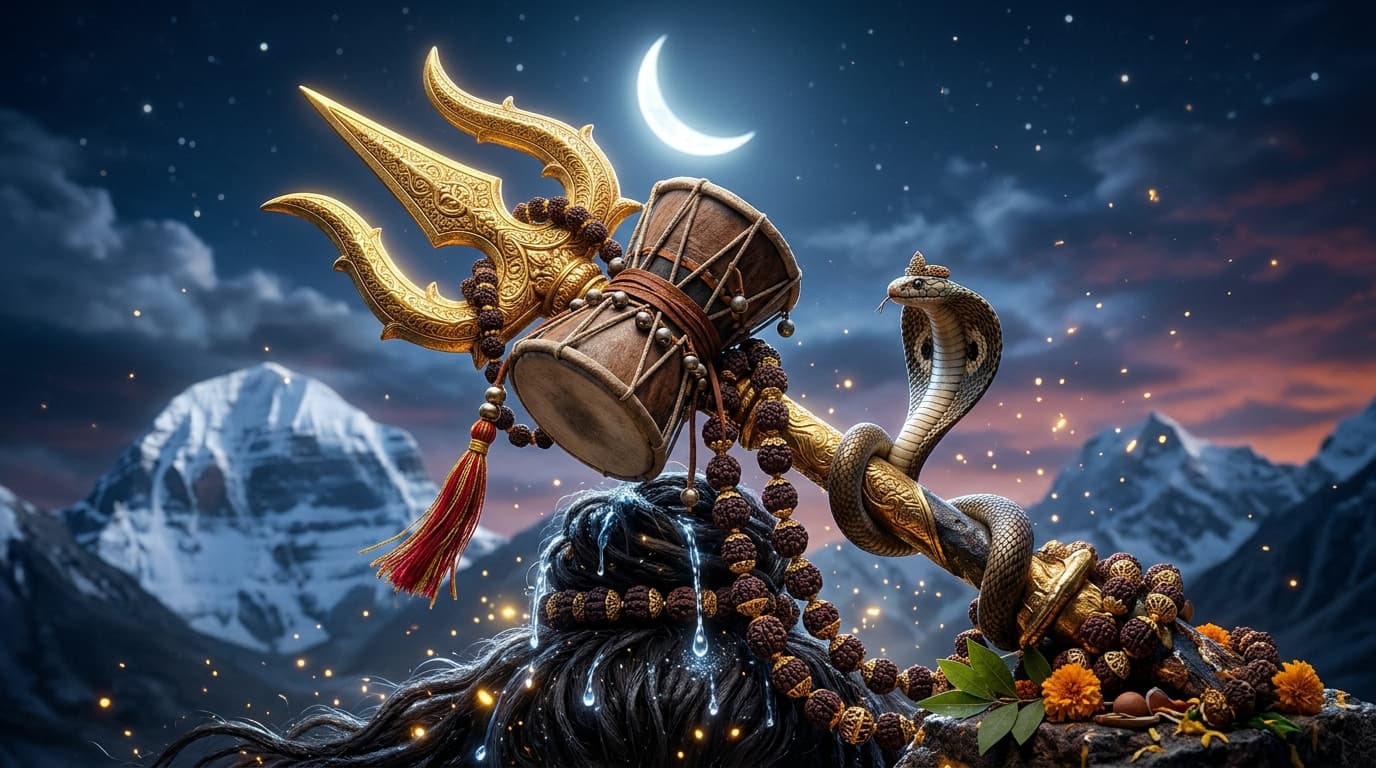
The Trishula (त्रिशूल) held in Shiva's right hand is perhaps His most recognizable emblem. Its three points symbolize mastery over various threefold universal principles:

• The Three Gunas: Sattva (purity/harmony), Rajas (passion/action), and Tamas (inertia/darkness). Shiva is Trigunatita — beyond the sway of all three qualities, yet holding them in perfect cosmic equilibrium.

• The Three Times (Trikala): Past, present, and future. Shiva as Mahakala exists eternally outside the river of linear time.

• The Three States of Consciousness: Jagrat (waking state), Swapna (dream state), and Sushupti (deep sleep). The central spear represents Turiya — the fourth transcendental state of pure awareness.

• The Three Nadis: Ida (cooling lunar channel), Pingala (heating solar channel), and Sushumna (central spiritual channel).
3. The Damru (Hourglass Drum): The Cosmic Rhythm of Creation

Fastened to the Trishula is the Damru (डमरू), the hourglass-shaped drum. When Shiva dances the cosmic Tandava, the beats of the Damru reverberate through empty space.

According to the Paninian grammatical tradition, the fourteen foundational sounds of the Sanskrit language (the Maheshwara Sutras) originated directly from the beats of Shiva's drum. The upper and lower triangles of the hourglass symbolize Purusha (spirit) and Prakriti (matter) meeting at the bindu (central knot). Its sound is Nada Brahma — the primordial frequency from which the universe expands and into which it dissolves.

4. The Crescent Moon (Chandra) & The River Ganga

Adorning Shiva's matted locks (Jata) are two extraordinary elements: the Crescent Moon and the celestial river Ganga:

• The Crescent Moon (Chandrama): Represents the human mind. The moon waxes and wanes, just as thoughts rise and fall. By wearing the crescent moon on His crown, Shiva demonstrates complete mastery over the wandering mind and time. It also signifies that wisdom shines brightest even when the moon is slender.

• The River Ganga: When King Bhagiratha prayed for the celestial Ganges to descend to purify the ancestors, Earth could not withstand the torrential descent of the cosmic river. Shiva caught the torrential flow in His tangled hair, releasing it as a gentle, life-giving stream. This represents the mastery of overwhelming cosmic energy and emotional turbulence through deep meditation.

5. Sacred Vibhuti (Bhasma) & Vasuki the Serpent

• The Sacred Ash (Bhasma / Vibhuti): Shiva smears His entire body with white cremation ash. Bhasma is the final irreducible reality after fire consumes all transient forms. It constantly reminds devotees of the temporary nature of the physical body and urges contemplation of the eternal Atman (soul).

• The Serpent Vasuki: Coiled three times around Shiva's neck, looking toward His right ear. The serpent symbolizes dormant Kundalini energy, transformed anger, and fearlessness in the presence of mortality.

Key Spiritual Insights
  • Trishula = Mastery over Gunas, Time, and Pranic channels
  • Damru = Origin of Sanskrit sounds and cosmic pulse
  • Crescent Moon = Tamed, peaceful intellect and meditation
  • Ganga = Spiritual knowledge flowing gently for world welfare
  • Vibhuti = Remembrance of eternal soul over mortal vanity
Daily Sacred Darshan

Experience High-Resolution 4K Wallpapers

Immerse your daily life in sacred geometry and divine presence with verified 4K mobile wallpapers.

Explore Darshan Gallery
Devotional Questions & Answers

Frequently Asked Questions

Q:Why does Lord Shiva have a blue throat (Neelkantha)?

During the churning of the cosmic ocean (Samudra Manthan), the lethal poison Halahala emerged, threatening to extinguish all creation. Out of supreme compassion, Lord Shiva drank the poison and held it in His throat without swallowing or spitting it, turning His throat blue.

Q:What does Shiva's Third Eye signify?

The Third Eye (Trinetra) on Shiva's forehead represents the eye of intuitive wisdom and non-dual vision (Jnana Chakshu). When opened, it burns away delusion, lust (Kama), and worldly ignorance.

Q:Why is having Lord Shiva's wallpaper on a mobile screen considered auspicious?

Aesthetic darshan of Lord Shiva with the crescent moon and calm meditative expression brings visual stillness and grounding reminders throughout a hectic digital day.

BhaktiAI Vedic Research Board

Sanatana Dharma Scholars & Practitioners

Composed of Sanskrit linguists and devotional practitioners dedicated to preserving classical Vedic knowledge and sacred iconography.

Deepen Your Sadhana

Related Canonical Studies